

Car Pulling to One Side After a Pothole? A Guide for Rapid City Drivers
A hard jolt from a pothole or curb can leave you wondering whether your vehicle is still driving the way it should. Maybe the steering wheel sits slightly off-center. Perhaps the car drifts toward the shoulder, or the tires suddenly sound louder than usual. Those changes are worth paying attention to, especially when you regularly travel around Rapid City and the Black Hills.
Quick answer: If your car begins pulling to one side after hitting a pothole, the impact may have changed its wheel alignment or damaged a tire, wheel, steering, or suspension component. Uneven tire pressure and brake problems can create similar symptoms. An inspection is the reliable way to distinguish them; an alignment should not be treated as an automatic fix.
What Does It Mean When a Car Pulls to One Side?
A vehicle that is tracking properly should generally travel straight on a level road without continuous steering correction. Some roads are deliberately sloped for drainage, so a mild drift on one street does not always indicate a mechanical problem. A strong or consistent pull, especially one that begins immediately after an impact, deserves closer attention.
The most useful clues are when the pull happens and what else has changed. Does it drift during steady driving? Is the steering wheel crooked even on a straight road? Does the pull become stronger only when you press the brakes? These details help a technician decide what to inspect first.
For drivers who notice steady drifting or uneven tire wear, a professional wheel alignment in Rapid City, SD can measure whether the wheels are positioned within the vehicle manufacturer’s specifications.
Alignment Problem or Something Else? Follow the Symptoms
The steering wheel is crooked while driving straight
An off-center wheel after a pothole impact can be a sign that wheel angles or steering components have changed. If the vehicle is otherwise stable, a technician can measure the alignment and check for bent or loose parts before making adjustments.
The vehicle pulls only when braking
A pull that appears mainly during braking may point to a braking-system concern rather than a wheel alignment issue. Uneven braking force, a sticking caliper, or another brake fault needs its own inspection. Learn more about brake repair and inspection in Rapid City, especially if you notice grinding, overheating, or reduced stopping performance.
The steering wheel vibrates at certain speeds
A vibration is not proof that the vehicle needs an alignment. A damaged wheel, tire imbalance, tire defect, or worn steering component can also cause shaking. After a severe pothole impact, the tire and rim should be checked for visible damage and hidden problems.
The car wanders or feels loose over bumps
Wandering, clunking, or imprecise steering can indicate worn or damaged suspension or steering components. A suspension repair inspection may be needed before any alignment work can produce reliable results.
Why Rapid City Roads Can Be Hard on Alignment
Rapid City drivers may encounter winter freeze-thaw cycles, rough pavement, construction zones, gravel roads, and unexpected potholes. A single severe impact can damage a component; repeated road impacts can also reveal existing wear. The goal is not to assume every rough-road trip requires an alignment, but to take changes in steering or tire wear seriously.
Look at your tires periodically. Excessive wear along one edge, feathered tread, or noticeably different wear patterns between tires are reasons to request an inspection. Tire wear may reflect alignment, inflation, suspension, or maintenance issues, so it should be evaluated in context.
What Happens During an Alignment Inspection?
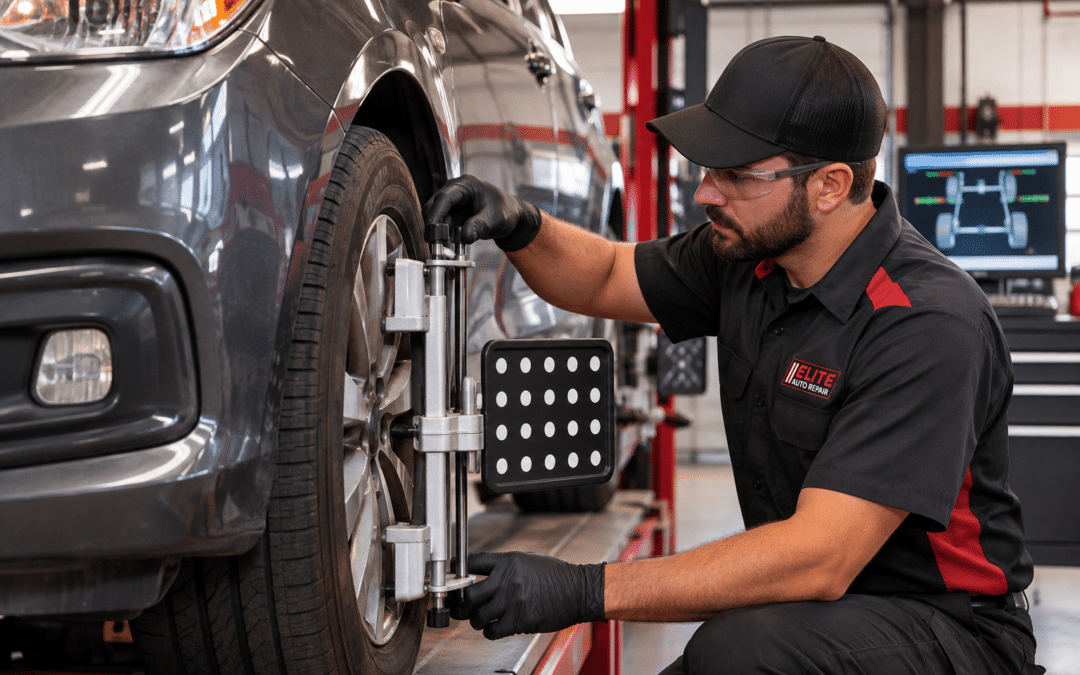
At Elite Auto Repair, the appropriate starting point is to understand the symptoms and inspect the vehicle’s condition. A technician may check tire pressure and wear, wheel condition, steering linkage, suspension joints, and other components before using alignment equipment to measure wheel angles.
Those measurements include toe, which describes whether wheels point inward or outward; camber, the inward or outward wheel tilt; and caster, a steering-axis angle that influences stability and steering return. Adjustments are made where the vehicle design allows and only after problems that would affect the results have been addressed.
If the steering feels unusually loose or stiff, the issue may require steering system inspection and repair rather than alignment alone.
Can You Keep Driving After Hitting a Pothole?
If you notice a tire bulge, air loss, severe vibration, loud knocking, significant pulling, or difficulty controlling the vehicle, stop in a safe location and arrange appropriate assistance rather than continuing your trip. Tire sidewall damage and major steering or suspension faults can be unsafe.
If the vehicle remains controllable but now pulls slightly or has a crooked steering wheel, schedule an inspection promptly and avoid delaying until abnormal tire wear becomes obvious.
Frequently Asked Questions
Does a car always need an alignment after hitting a pothole?
No. A pothole does not automatically mean the alignment is out of specification. Have the vehicle checked if handling changes, the steering wheel becomes off-center, a tire is damaged, or uneven tread wear develops.
Can low tire pressure make a car pull to one side?
Yes. Unequal tire pressure can contribute to a pull. Check pressures against the vehicle’s door-jamb placard when tires are cold, but have persistent pulling inspected even if pressures are correct.
Is wheel balancing the same as alignment?
No. Balancing addresses uneven weight distribution in a tire-and-wheel assembly, while alignment measures and adjusts wheel angles. A vehicle can need one, both, or neither.
Why does my car pull more when I brake?
A braking-related pull is a reason to inspect the brakes, not simply book an alignment. Because stopping performance can be affected, seek service promptly.
Schedule a Steering and Alignment Inspection in Rapid City, SD
If your car started pulling after a pothole, let Elite Auto Repair help identify the reason before replacing tires or making unnecessary adjustments. Our Rapid City team can assess alignment-related symptoms and determine whether your tires, brakes, steering, or suspension need attention. Request an appointment to have the vehicle checked.
Elite Auto Repair
Address
202 N. Cherry Ave
Rapid City, SD 57701
Phone
605-430-2565
Shop Hours
Mon – Thu | 7:00am – 5:00pm
Sat – Sun | Closed